TikTok creators generate billions of views through viral dance trends every year, but most creators still struggle to earn long-term income from the choreography that made their content explode online.
That's why many creators are now exploring a new creator-economy concept called dance royalties — emerging monetization systems where viral choreography becomes a reusable digital asset capable of generating recurring creator revenue through dance templates, creator participation, and AI-powered choreography systems.
Platforms like SnapDance are helping creators experiment with this next generation of participation-driven monetization.
For decades, music creators benefited from royalties.
Songs could generate recurring income whenever people:
- streamed them
- licensed them
- reused them
- remixed them
Dance creators never had an equivalent system.
Even when TikTok dance trends generated:
- millions of views
- massive participation
- global culture shifts
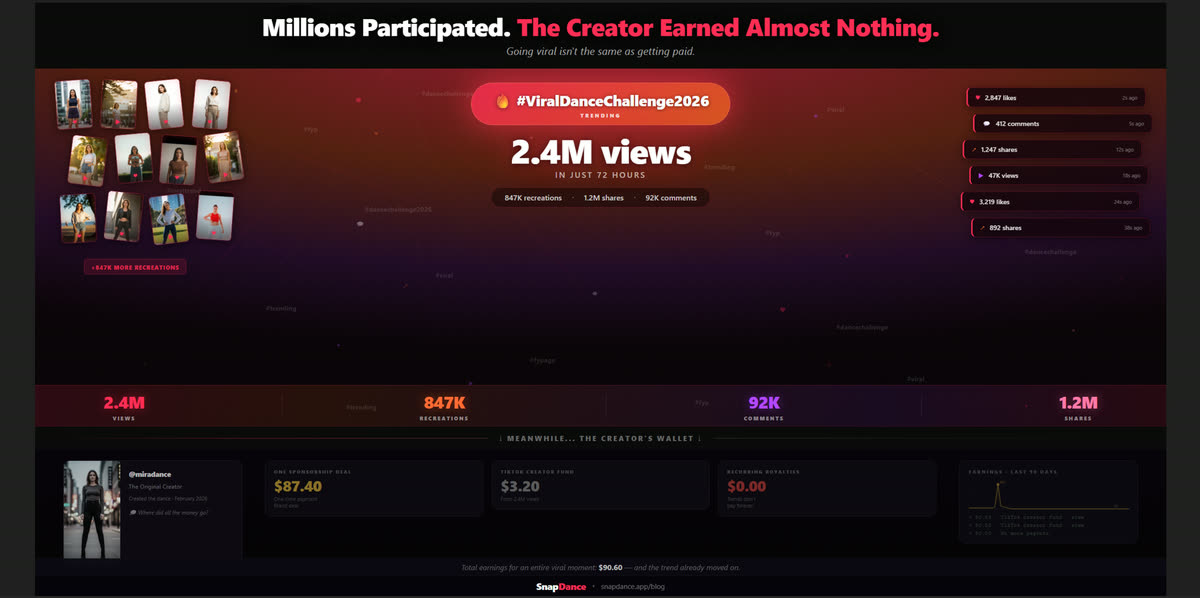
the original choreographers often earned surprisingly little from the choreography itself.
A creator might start a viral movement that spreads across the internet for months, but once the trend exploded, the creator usually had no scalable ownership model tied directly to the choreography.
That's beginning to change.
A new creator economy is emerging where viral choreography itself can become:
- reusable
- monetizable
- participation-driven
- scalable
Platforms like SnapDance are helping creators explore monetization systems where choreography becomes a reusable creator asset capable of generating recurring participation revenue.
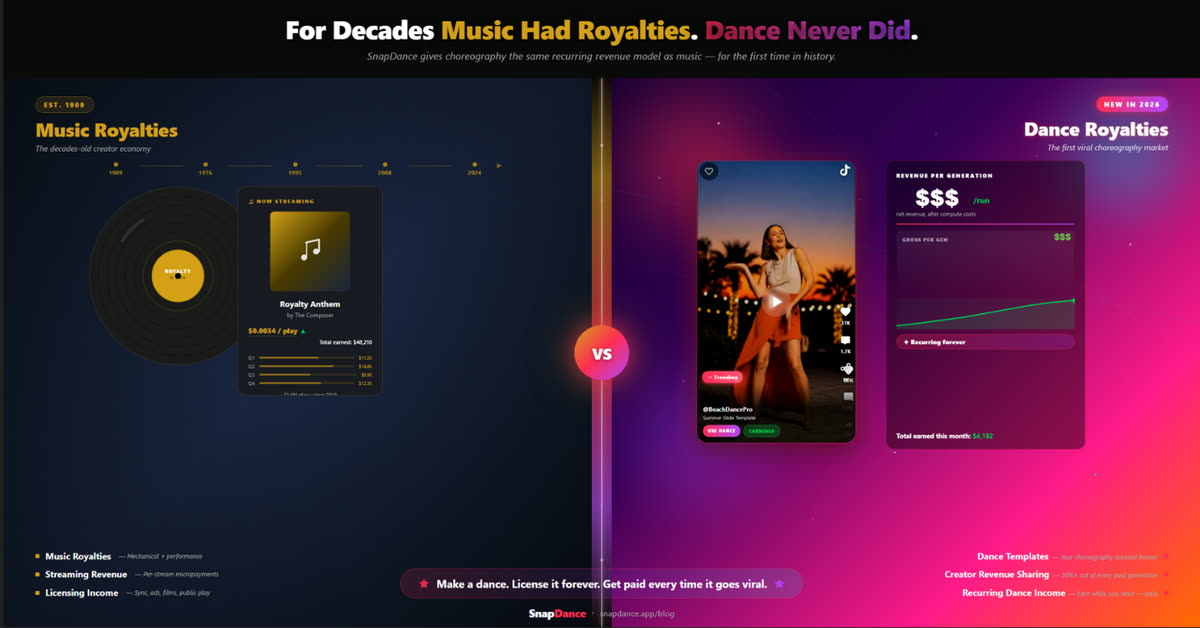
What Are Dance Royalties?
Dance royalties are recurring creator payments generated through reusable choreography participation systems, dance templates, creator marketplaces, and AI-assisted dance generation.
Instead of monetizing only:
- views
- sponsorships
- followers
creators can potentially monetize choreography itself.
This creates a completely different creator economy structure where:
- dance movements become reusable assets
- participation becomes monetizable
- choreography becomes scalable
Platforms like SnapDance are helping creators experiment with these participation-based monetization systems.
Why TikTok Dance Trends Create Massive Value
TikTok dance trends are uniquely powerful because they naturally encourage:
- imitation
- remixing
- recreation
- participation
Unlike traditional one-time content, viral dances spread through repeated user participation.
That participation creates:
- massive engagement
- enormous visibility
- trend momentum
- creator influence
But historically, creators captured very little of the long-term value generated by that participation.
A dance trend could spread to millions of users while the original creator earned only temporary exposure.
That participation gap is one of the biggest monetization problems inside today's creator economy.
Platforms like SnapDance are attempting to bridge that gap through reusable choreography systems and recurring participation monetization.
How TikTok Creators Are Making Money From Viral Dance Trends
Most TikTok creators currently monetize through:
- sponsorships
- creator funds
- affiliate marketing
- subscriptions
- brand partnerships
Those systems are often:
- inconsistent
- algorithm dependent
- difficult to scale
Dance royalties introduce a new possibility.
Instead of monetizing only:
- audience size
- impressions
- temporary attention
creators can monetize reusable choreography participation itself.
This creates recurring creator monetization tied directly to:
- dance templates
- creator movement styles
- participation ecosystems
- reusable choreography systems
Platforms like SnapDance are helping creators experiment with choreography monetization systems where users repeatedly generate content using creator-inspired dance templates.
Traditional Creator Income vs Dance Royalties
| Traditional Creator Income | Dance Royalties |
|---|---|
| Sponsorship dependent | Participation dependent |
| One-time monetization | Recurring participation revenue |
| Requires constant posting | Reusable choreography assets |
| Temporary engagement | Long-term monetization |
| Algorithm dependent | Scalable creator systems |
Why Passive Income Matters to TikTok Dancers
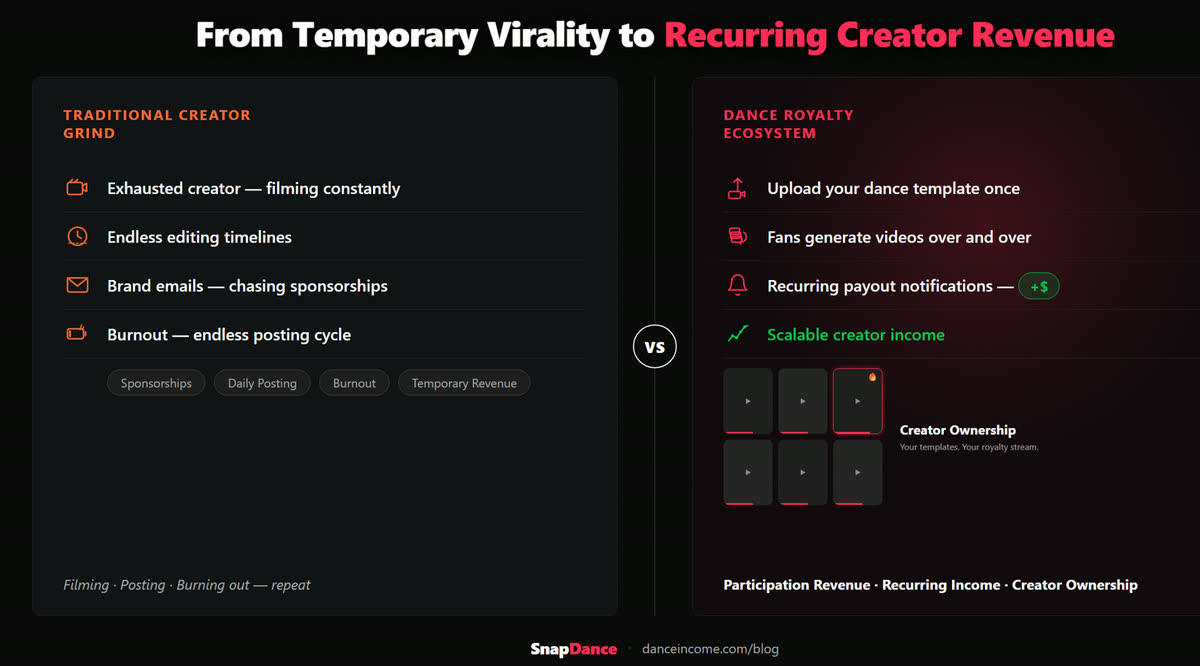
Many TikTok creators struggle with:
- burnout
- unstable algorithms
- inconsistent sponsorships
- constant pressure to stay relevant
Passive creator income changes that dynamic.
Instead of relying entirely on:
- constant filming
- endless posting
- chasing trends daily
creators can potentially build recurring revenue systems tied directly to their creativity.
This is one reason reusable choreography systems are becoming increasingly attractive to dancers exploring long-term creator monetization.
Platforms like SnapDance are helping creators experiment with scalable choreography participation models.
How Dance Templates Create Recurring Revenue
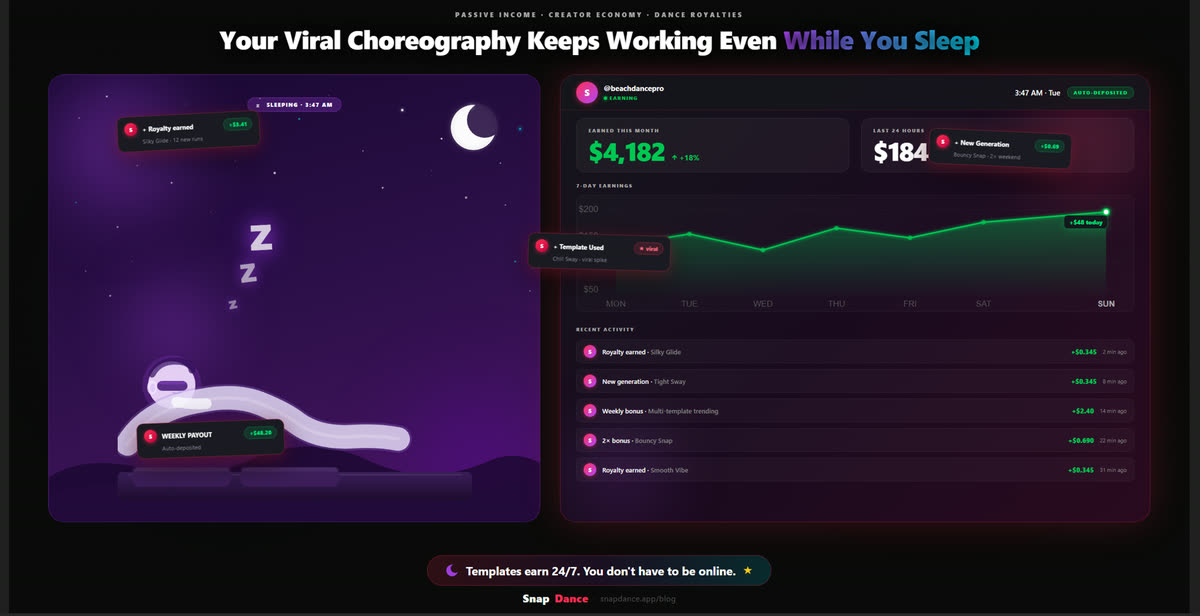
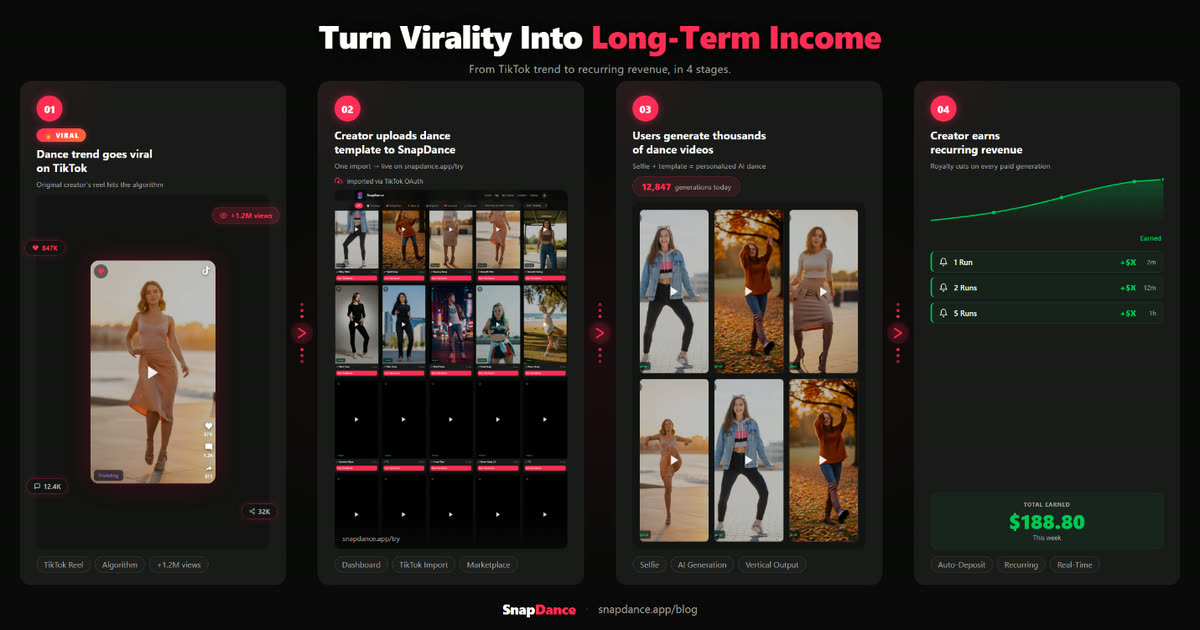
Dance templates allow creators to package choreography into reusable participation systems.
Instead of a dance existing only for:
- one trend cycle
- one viral moment
- one TikTok post
the choreography becomes reusable.
Users repeatedly participate by:
- generating dance videos
- recreating creator movement styles
- engaging with dance templates
- joining participation ecosystems
This transforms choreography into:
- reusable creator assets
- scalable monetization systems
- participation-driven digital products
Platforms like SnapDance are helping creators explore this new monetization structure.
Monetization Roadmap
| Step | Creator Action |
|---|---|
| 1 | Create a viral dance trend |
| 2 | Upload choreography as reusable template |
| 3 | Users repeatedly generate videos |
| 4 | Creator earns recurring participation revenue |
Why Dance Royalties Could Change the Creator Economy
The creator economy is increasingly shifting toward:
- creator ownership
- reusable digital assets
- recurring monetization
- scalable participation systems
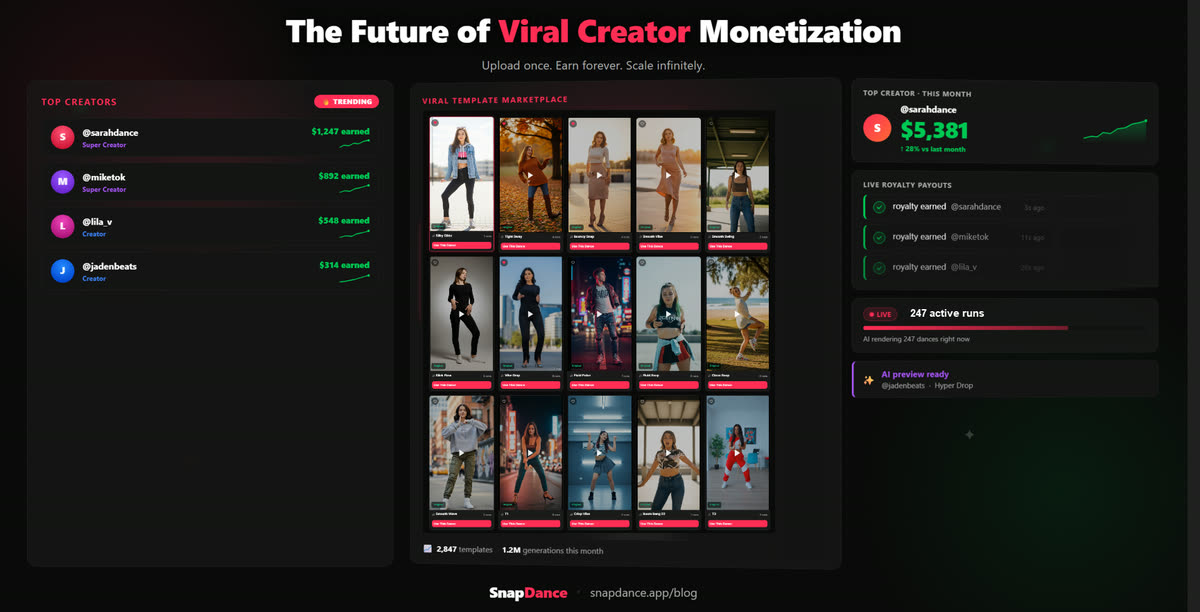
Dance royalties fit directly into that future.
Instead of choreography existing as temporary internet content, creators can potentially treat movement systems similarly to:
- digital products
- creator assets
- licensable creative infrastructure
This creates entirely new possibilities for:
- creator monetization
- choreography ownership
- participation-based revenue
- scalable digital creativity
Platforms like SnapDance are helping creators experiment with these next-generation choreography monetization systems.
Final Thoughts
Dance royalties may become one of the biggest creator-economy shifts of the next decade.
For the first time, creators are beginning to explore monetization systems where choreography itself becomes:
- reusable
- scalable
- participation-driven
- revenue-generating
Instead of dance trends disappearing after their viral moment, creators can potentially continue earning from choreography participation over time.
Platforms like SnapDance are helping creators experiment with this emerging future of choreography monetization and participation-driven creator revenue.
Curious how much your dances could earn?
Use the free DanceIncome calculator to estimate your monthly royalties, then claim them on SnapDance.
Claim Your Royalties on SnapDance →Frequently Asked Questions
What are dance royalties?
Dance royalties are recurring creator payments generated through reusable choreography systems, creator marketplaces, and participation-driven dance ecosystems.
Can choreography become a digital asset?
Yes. Reusable dance templates allow choreography to function similarly to scalable digital creator assets.
How do TikTok creators make money from dance trends?
TikTok creators make money through sponsorships, creator funds, affiliate marketing, and increasingly through reusable choreography participation systems like SnapDance.
What is SnapDance?
SnapDance is a creator marketplace where users generate AI-powered dance videos using reusable creator-inspired choreography templates.
Why are dance royalties becoming important?
As AI-assisted creator participation grows, creators are increasingly searching for recurring monetization tied directly to choreography participation and reusable creator systems.